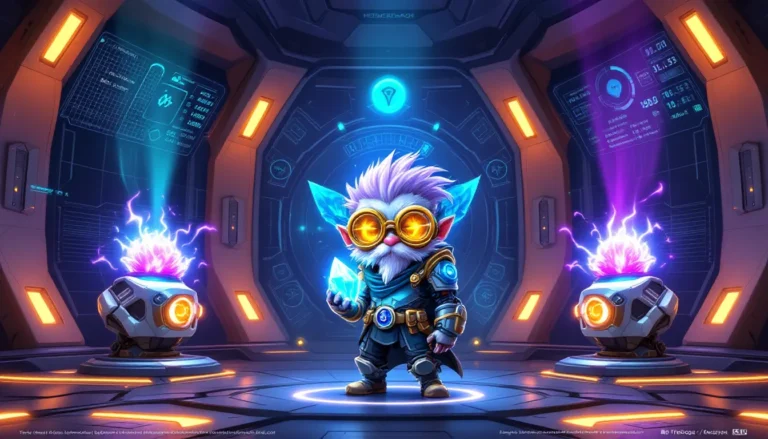

Lulu is one of League of Legends’ most versatile support champions, and she’s been a staple in the meta for years. Whether you’re climbing the ranked ladder or exploring support options for the first time, understanding Lulu’s kit and playstyle is essential. She brings utility, crowd control, and the ability to turn fights in your team’s favor, all while maintaining one of the highest skill ceilings in the support role. If you’re serious about mastering League of Legends and securing victories, learning Lulu isn’t optional: it’s a smart investment in your gameplay.
Table of Contents
ToggleKey Takeaways
- Lulu is a versatile support champion whose strength lies in utility, peel, and decision-making rather than mechanical skill, making her valuable for both climbing and learning the support role.
- Master Lulu’s ability kit—especially the synergy between Pix and Glitterlance for dual projectile damage, Whimsy for polymorph/movement control, and Wild Growth for teamfight-winning shields—to maximize her impact in fights.
- Adapt your build dynamically based on enemy composition: prioritize Luden’s Tempest for damage, Liandry’s Torment against tanks, and defensive items like Zhonya’s or Abyssal Mask when needed.
- Proactive shield casting before damage arrives and proper positioning 2–3 champion widths behind your carry are critical to effective peeling and teamfight control.
- Avoid wasting Wild Growth on minor situations; save your ultimate for high-impact moments like all-ins, major teamfights, and objective contests where it meaningfully swings the outcome.
- Identify and eliminate common mistakes—reactive ability casting, poor Pix positioning, weak vision control, and refusing to adapt—to accelerate your climb and close the gap between average and exceptional Lulu players.
Who Is Lulu and What Role Does She Play?
Lulu is a ranged support champion with an emphasis on utility and peel. She excels at protecting her team’s carries while providing enough damage to pressure enemies in lane. Her playstyle revolves around timing and decision-making rather than raw mechanical skill, making her accessible to newer players while offering depth for veterans.
As a support, Lulu functions best in the bot lane during the early game, laning alongside the ADC (Attack Damage Carry). Her primary job is to enable her team through shields, movement speed buffs, and crowd control. Unlike aggressive supports that look to hook or dive enemies, Lulu plays a more methodical game, controlling space, zoning opponents, and ensuring her team has the tools to win fights.
Lulu’s identity centers on Pix, her faerie companion, who provides utility both in lane and teamfights. This mechanic differentiates her from other supports and gives experienced players room to optimize positioning and ability usage. In competitive play and solo queue alike, Lulu’s flexibility makes her valuable across multiple meta shifts. Her kit allows her to transition from a laning-focused champion into a teamfight machine that can single-handedly swing momentum in crucial moments.
Compared to other support champions like League of Legends Yuumi, Lulu maintains more agency in fights and better waveclear early on. This makes her particularly effective when facing poke-heavy lanes or when your team needs consistent damage prevention rather than reactive healing alone.
Lulu’s Abilities Explained: Kit Breakdown and Mechanics
Understanding Lulu’s abilities is crucial to maximizing her potential. Each ability serves a specific purpose, and their synergy creates opportunities for skilled players to outplay opponents.
Passive – Pix, Faerie Companion
Pix is Lulu’s passive and defines her playstyle. Pix attaches to either Lulu or an ally, dealing bonus magic damage on attacks and revealing enemies hit by Pix’s projectiles. When attached to Lulu, Pix enhances her auto-attacks. When you cast Help, Pix. on an ally, Pix switches to that ally and grants them enhanced attacks for a few seconds. This mechanic is deceptively powerful, it allows you to extend your team’s damage output and gather vision information on scattered enemies. Learning when to move Pix between targets is what separates casual Lulu players from strong ones.
Q – Glitterlance
Glitterlance is Lulu’s main ability for both damage and utility. She fires a projectile that hits the first enemy, slowing them by 80% for 2 seconds. If Pix is attached to an ally, Pix also fires a projectile that hits enemies in a different area, potentially slowing multiple targets. This ability has a 5-second cooldown at max rank, making it your bread and butter for harassment, poke, and kiting. The slow is potent enough to lock down enemies or allow escapes, and the dual projectile mechanic when Pix is on an ally is invaluable for creating catch opportunities.
Practically speaking, max this ability second (after Help, Pix.) to reduce cooldown and increase damage output as the game progresses.
W – Whimsy
Whimsy is a versatile ability that polymorph enemies or grant movement speed to allies. When cast on an enemy, they become a harmless small creature for 1.5 seconds, unable to attack or cast abilities, essentially a disable that’s perfect for stopping all-ins or peeling for your carry. When cast on an ally, they gain 35% movement speed for 5 seconds. The decision of when to use this offensively versus defensively is crucial. Polymorphing an enemy jungler attempting a gank can save your ADC: using it on your carry for kiting creates space and repositioning opportunities.
The cooldown is 6 seconds at max rank, and maxing this third (or even second in certain matchups) accelerates your utility power spike. Many Lulu players skip leveling this early in favor of maxing Help, Pix. and Glitterlance, but a single point ensures you have crowd control from level 3.
E – Help, Pix.
Help, Pix. shields an ally and moves Pix to them temporarily. The shield scales with ability power and grants movement speed to the shielded target. This is your primary defensive tool and should be maxed first for stronger shields and lower cooldown (5 seconds at max rank). The movement speed component is underrated, it allows your ADC to kite, reposition, or escape without needing to use Whimsy. Using this proactively before damage arrives is more efficient than reactively shielding after the fact.
R – Wild Growth
Wild Growth is Lulu’s ultimate ability and arguably the most impactful tool in her kit. She targets an ally, granting them a large shield and knocking nearby enemies away. The shielded ally also gains bonus size and health percentage increase for 7 seconds, making them tankier. The knockback creates space and can disrupt enemy positioning or stop advancing threats. This ability turns fights, a well-timed Wild Growth on your ADC during a burst combo or on a low-health teammate during a teamfight can flip the outcome. The cooldown is 80 seconds at rank 1, reducing to 50 seconds at rank 3, so you’ll have it up for major fights. Always hold it for critical moments rather than using it for minor harass or early-game poke.
Best Build Paths and Item Recommendations
Lulu’s item build varies depending on the enemy composition, your team’s needs, and the game state. Unlike damage-focused champions, Lulu prioritizes utility and survivability while maintaining enough damage to pressure enemies.
Support Build Essentials
Start with Spellthief’s Edge, a gold-generating item that rewards poking enemies and provides early ability power. This allows you to gain gold while supporting your ADC, a core principle of modern support itemization.
Your first completed item should be Mythic, chosen based on the matchup. Luden’s Tempest is the most common choice, providing mana, cooldown reduction, and burst damage through its passive proc. It amplifies your poke damage and helps you farm waveclear if necessary. Liandry’s Torment is effective against tanky compositions, stacking percent health damage that scales into the late game. Mandate of Empire (formerly Imperial Mandate) is solid for added utility and shred for your ADC’s benefit.
After your Mythic, build Shurelya’s Battlesong to provide movement speed to your entire team and yourself, invaluable for repositioning during fights. The 20% cooldown reduction accelerates your ability spam, letting you cast Help, Pix. and Glitterlance more frequently.
Next, consider Zhonya’s Hourglass if enemies have heavy AD or all-in potential. The invulnerability effect during the active lets you dodge crucial abilities or prevent burst damage from catching you out of position. If magic damage is the primary threat, Abyssal Mask is a solid defensive option that reduces magic damage for your entire team.
Round out your build with items like Horizon Focus (for additional ability power and a debuff that increases subsequent damage), Void Staff (for penetration against heavily armored teams), or Rylai’s Crystal Scepter (for additional slow utility and survivability). If you’re against physical damage-heavy comps and need more armor, Frozen Heart provides cooldown reduction and mana alongside armor.
The beauty of Lulu’s build flexibility is adapting to what your team needs in real-time. Avoid rigidly following a preset path, read the game and itemize accordingly.
Utility and Situational Items
Morellonomicon is necessary against healing-reliant enemies (think champions with built-in sustain or heavy lifesteal). The grievous wounds passive reduces enemy healing, crippling their sustainability and allowing your team to close out fights.
Mikael’s Crucible is underrated but powerful against crowd control-heavy enemy teams. The active removes crowd control from an ally, functioning as a cleanse for teammates. This can turn teamfights by freeing a controlled carry.
Oracle Lens (the upgraded sweeper trinket) isn’t an item purchase, but upgrading your trinket should be a priority to maintain vision control and deny enemy wards, especially in high-stakes fights around objectives.
Laning Phase Strategy and Early Game Tips
Lulu’s laning phase is about establishing dominance through poke and vision control while scaling toward your mid-game power spike.
Spend the first few minutes understanding your matchup. Some bot lane duos will abuse you early: others struggle against your poke. Against aggressive supports like Thresh or Blitzcrank, respect their engage range and position behind your ADC. Use Glitterlance and auto-attacks to harass from a safe distance, letting your range advantage wear them down. Never overextend for kills, consistent chip damage accumulates and forces enemies back or into mistakes.
Against poke-heavy matchups, use Help, Pix. proactively on your ADC. The shield prevents unexpected burst damage and the movement speed allows cleaner dodging of skillshots. Ward correctly by placing deep river wards that detect ganks before they happen. A timely warded bush gives your ADC 5+ extra seconds to reposition, turning would-be kills into safe escapes.
Focus on maintaining your CS (creep score) via Glitterlance‘s damage, but never sacrifice positioning for kills. A dead support is worthless, regardless of how fed you are. Your goal is hitting level 6 relatively healthy and with your ADC alive, this unlocks Wild Growth and transforms your team’s fight potential.
Matchups and Champion Synergies
Lulu pairs exceptionally well with ADCs that benefit from protection and utility. Champions like Kaisa, Caitlyn, and Jinx love the movement speed from Help, Pix. and Whimsy, enabling their kiting and positioning. Immobile carries like Ashe or Kog’Maw especially value Lulu’s peel, as her crowd control and shields directly enable their survival.
Against engage-heavy supports, your goal is disruption. Whimsy polymorphing an enemy support’s engage tool (like a Leona or Nautilus on their way in) completely negates their approach. Similarly, use Glitterlance‘s slow to create distance and prevent enemies from closing gaps.
Hard matchups include supports with instant lockdown like Rell (her magnetic field grants her CC immunity, negating Whimsy‘s polymorph) or poke supports that outdamage your shields, like Senna. In these cases, play around your ADC’s strengths and focus on scaling. Itemize defensively and prepare for mid-game where your utility shines brighter. You can check Mobalytics for detailed matchup data and how professional players handle specific interactions.
Mid and Late Game Positioning and Team Fight Tactics
Once laning ends, Lulu transitions from a lane-focused support to a teamfight lynchpin. Your positioning during fights determines whether your team survives and wins or gets wiped.
Optimal Spacing and Peel Mechanics
Position approximately 2-3 champion widths behind your primary carry (usually your ADC). This spacing allows you to:
- Use Help, Pix. on them without overextending
- Apply Glitterlance to frontline threats or kiting targets
- Whimsy engage threats before they reach your carry
- Wild Growth them during critical moments without being caught in the same engagement
If enemies focus on diving your backline through unconventional angles (like a jungler flanking), adjust by moving with your carry and ensuring you’re always “behind” relative to where danger approaches. This requires constant awareness and map reading.
When peeling for your carry, prioritize stopping threats in this order: enemies that pose immediate, existential danger (like a Zed using his ultimate) take Whimsy priority. Enemies closing distance benefit from Glitterlance‘s slow more than single-target crowd control. Threats applying sustained damage get shielded via Help, Pix. so your carry can kite or reposition freely.
Engaging High-Impact Teamfights
Lulu’s playstyle in teamfights isn’t about initiating. Instead, you react and amplify. When your team engages (or an enemy engages on you), immediately identify the highest-impact target for Wild Growth. This is usually:
- Your primary damage dealer if they’re in danger
- A low-health carry that needs immediate survival tools
- A teammate tanking focus fire and needing shields/size boost
Use Help, Pix. and Glitterlance to maintain spacing and prevent enemies from accessing your backline. If the teamfight pivots and enemies redirect focus elsewhere, dynamically shift your ability usage. A Whimsy to polymorph an engage threat is vastly different from using it for movement speed on your carry during kiting.
One subtle but powerful tactic: if enemies are grouped, casting Glitterlance with Pix on an ally automatically hits enemies in a wider area, potentially slowing multiple threats. This is more efficient than casting it on single targets when possible. Place yourself where you can access multiple teammates and enemies with your ability range, but maintain safety by staying behind frontlines.
In extended fights, cooldown management is critical. Wild Growth should only be used when impact is maximized, wasting it on a single tick of damage is inefficient. Similarly, save Whimsy for high-impact interrupts rather than using it offensively unless you have clear win conditions.
Check Game8 for updated teamfight scenarios and macro positioning tips, as these evolve with patch changes and meta shifts.
Runes, Summoner Spells, and Champion Matchups
Your rune setup and summoner spell selection dramatically impact how you execute Lulu’s gameplan.
Optimal Rune Selections
Primary Path: Precision is the most flexible option. Take Summon Aery as your keystone for additional shields that stack with Help, Pix., amplifying your protection utility. Follow with Manaflow Band (extra mana and regeneration helps you spam abilities), Transcendence (cooldown reduction at level 11), and Gathering Storm (scaling AP for late-game impact).
Alternatively, Primary Path: Inspiration using Glacial Augment creates slows on your auto-attacks, amplifying Glitterlance‘s utility. Pair it with Hextech Flashtraption (Biscuit Delivery is also acceptable), Minion Dematerializer, and Cosmic Insight. This setup is more experimental and excels in slower, more controlled games.
Secondary Path: Resolve is standard, providing Font of Life (enemies you crowd control are healed less, helping your team’s sustain) and Revitalize (shields are more effective). Alternatively, Adaptive Force and Armor/Magic Resist provide raw survival stats, especially valuable against burst-heavy matchups.
Rune flexibility matters. Against all-in supports, prioritize Resolve secondary for early tankiness. Against poke-heavy matchups, consider Sorcery secondary for additional mana and movement speed. The meta shifts frequently, so adapt based on what works for your elo and current patch.
Difficult Matchups and How to Navigate Them
Hard Matchups: Rell, Senna, Swain
Rell is genuinely problematic because her magnetic field grants CC immunity, nullifying your Whimsy polymorph. Play around her cooldowns, she needs to position herself directly on you to engage, so maintain safe spacing. Use Glitterlance‘s slow to deny her approach vectors. Senna outpokes you from range and her gimmick (long-range autos) means she controls lane differently than traditional supports. The counterplay is positioning deeper and shielding frequently. Swain punishes grouped positioning with his ultimate, so space allies wider and position separately when his ult is up.
Manageable Matchups: Thresh, Leona, Nautilus
These champions threaten with engage. Whimsy their hookshot/engage ability mid-animation, and you completely nerf their threat level. Leona is relatively slow before level 6, so abuse her mobility limitation early. Nautilus has a longer hook cooldown than Thresh, so you have windows to trade freely between his cooldowns.
Favorable Matchups: Yuumi, Soraka, Lux
Yuumi is immobile and vulnerable to burst. Coordinate with your ADC to pressure her before she reaches full shield stacking. Soraka relies on sustained trading, you out-DPS her poke and can focus-fire her if she overextends. Lux is a skillshot champion, so movement and proper warding deny her vision advantage. Her self-peeling is weak compared to Lulu’s, giving you superior teamfight control.
For comprehensive matchup data against all League of Legends champions, consult updated tier lists and patch notes that reflect current balance changes. Matchup difficulty shifts with every patch, so staying informed is essential for climbing.
For Summoner Spells: Take Smite if you’re in a situation where your team needs early objective control (rare for support). Standard picks are Flash and Exhaust. Flash is mandatory for escape and repositioning. Exhaust is superior against all-in champions and auto-attack-reliant ADCs on the enemy team. Consider Heal if your ADC isn’t taking it and your team needs redundant healing, but this is suboptimal for Lulu, your shields and peel are better than raw healing.
Professional players and esports analysts on LoL Esports frequently showcase optimal rune and summoner spell adaptations based on draft and meta requirements, so watching pro gameplay provides insights into current optimization.
Common Mistakes and How to Improve Your Lulu Play
Even experienced players make recurring mistakes with Lulu. Identifying and correcting them accelerates improvement.
Mistake 1: Using Abilities Reactively Instead of Proactively
Many players cast Help, Pix. only after their ADC has taken damage. This is inefficient. Shield before damage arrives by reading enemy ability animations and predicting incoming threats. A shield that prevents 300 damage is far superior to healing 300 damage after the fact. Similarly, preemptively casting Whimsy on an ally moving into a dangerous area is better than waiting for the engage to land.
Mistake 2: Wasting Wild Growth on Minor Situations
Your ultimate has an 80-second cooldown (50 at rank 3). Burning it for a single shield when no immediate threat exists means it’s unavailable for critical teamfights. Use it when:
- An all-in is happening and you need immediate survival tools
- A teamfight is unfolding and you need to amplify your team’s threat
- An objective (Baron, Dragon) is being contested and positioning matters
Holding it and timing it perfectly is more valuable than using it whenever available.
Mistake 3: Poor Positioning Relative to Pix
Remember that Glitterlance fires from Pix’s current location. If Pix is on your ADC and you’re standing directly next to them, both projectiles might hit the same target, wasting potential dual slow. Instead, position sideways so Pix on your ally can hit different targets with their Glitterlance projectile, effectively covering wider areas.
Mistake 4: Ignoring Vision and Warding
Support’s role includes vision control. Place wards in river brush early, transition to deeper map placements mid-game, and clear enemy wards whenever possible. A single well-placed ward that enables a gank or prevents a suprise engage is worth the 75 gold cost. Conversely, allowing enemies to roam unchecked through unwarded areas costs your team kills.
Mistake 5: Not Adapting Build or Playstyle
- If enemies are grouping, itemize for utility and AoE capability
- If enemies are split, shift toward protecting your most important split-pusher
- If your team is ahead, you can play more aggressively and use Wild Growth offensively
- If your team is behind, prioritize survival and peel over risky plays
Improvement Path:
Watch replays of your Lulu games. Pause at teamfights and ask yourself: “Did I use abilities optimally? Could I have prevented that death? Did my positioning enable my team’s win condition?” Identify patterns in your deaths and failures, if you’re frequently caught out of position, play safer and prioritize vision. If your teamfight impact is low, practice ability timing and positioning.
Play against real opponents to understand the matchup depth. Bots and practice tool games teach mechanics, but climbing requires real-world experience. The difference between a 50% winrate and a 60% winrate Lulu player is decision-making under pressure and reading your team’s needs. Focus on these macro skills rather than micro mechanics, as they scale better at higher levels of play. Comparing your gameplay against League of Legends Mid Tier List champions can also inform you on how support impacts map pressure and game tempo relative to other roles.
Conclusion
Mastering Lulu in League of Legends is a journey that rewards game knowledge, decision-making, and adaptability. She’s not a mechanical monster like some champions, but her high skill ceiling lies in understanding matchups, positioning, and teamfight impact. Your ability to protect your team, amplify their damage, and control fights determines whether you climb or stagnate.
Start by mastering her ability rotations and basic itemization. Progress to understanding matchups and when to play aggressively versus defensively. Finally, develop the game sense to read situations and adapt your playstyle accordingly. The gap between an average Lulu and a great one isn’t flashy plays, it’s consistent, high-impact decision-making that accumulates over time.
As the meta continues evolving in 2026, Lulu’s flexibility ensures she remains viable. Whether support itemization shifts, champions are buffed or nerfed, or the meta demands different team compositions, her core identity as a utility-focused protector adapts well. Keep learning, stay curious about patch changes, and most importantly, enjoy the process of improving. Your future teammates will appreciate playing with a Lulu who actually understands the role.