
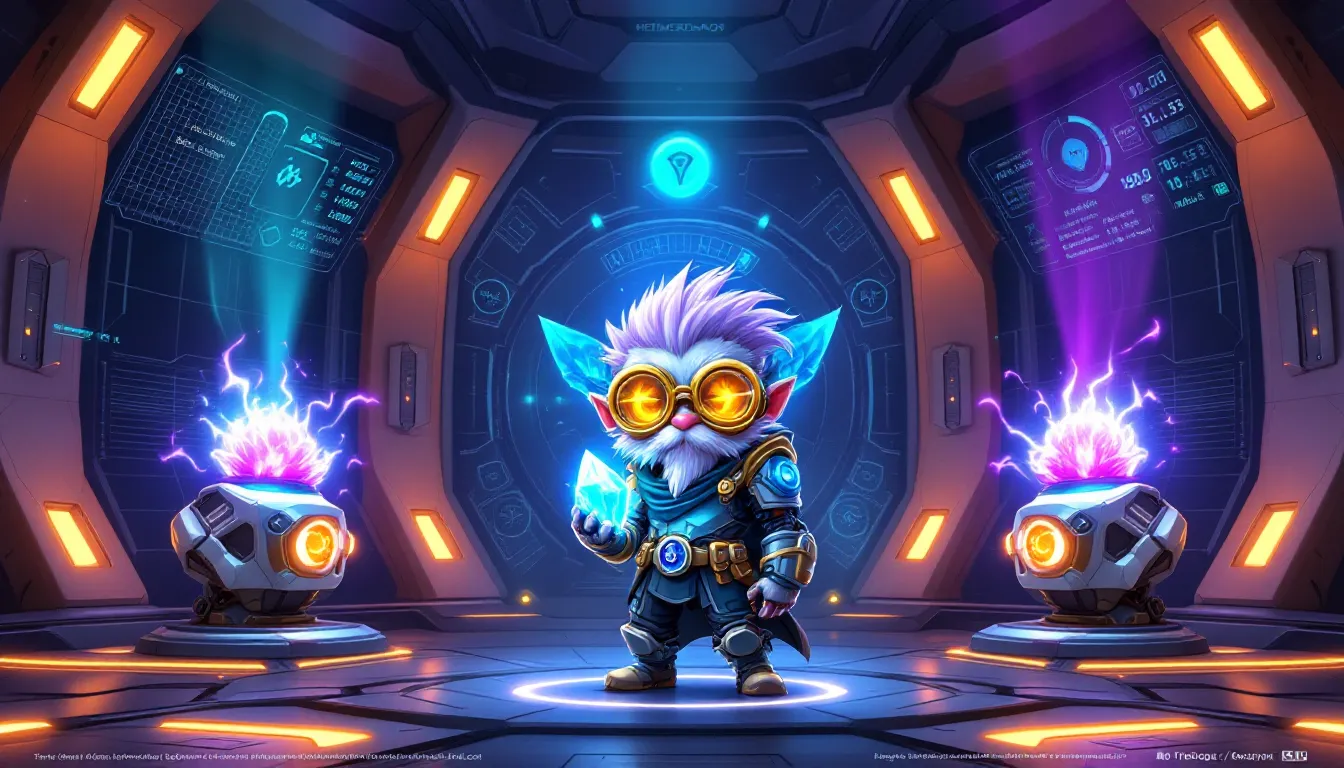
Heimerdinger is one of League of Legends’ most deceptive champions. At first glance, he looks like a quirky support character, a tiny yordle tinkerer who plants laser turrets. But in the right hands, he’s a map-control powerhouse capable of shutting down entire lanes and dictating team fights from the backline. Whether you’re pushing mid lane, holding top as a second top laner, or even supporting, Heimerdinger’s turret-centric kit rewards players who understand positioning, placement timing, and macro awareness. This guide breaks down how to unlock his potential in 2026, covering everything from laning fundamentals to advanced ranked strategies that’ll have opponents respecting your space the moment you place down your first turret.
Table of Contents
ToggleKey Takeaways
- Heimerdinger League of Legends excels as a zone controller through strategic turret placement that denies enemy positioning and forces unfavorable fights.
- Master early-game mana management and turret placement near enemy minions to gain psychological pressure and accumulate health advantages over the laning phase.
- Core itemization prioritizes Luden’s Tempest and Liandry’s Anguish to reach 40% ability haste quickly, enabling consistent turret placement and sustained damage output.
- Mid-game domination comes from placing turrets at key objectives and choke points to control Baron, Dragon, and tower sieges while maintaining safe backline positioning.
- Ranked climbing success depends on macro discipline—vision control, trading map pressure for objectives, and using your ultimate to zone enemies during committed team fights.
- Counter difficult matchups like LeBlanc and Yasuo through defensive itemization (Zhonya’s), macro adjustments, and requesting jungle assistance rather than forcing direct confrontations.
Who Is Heimerdinger And Why He Matters
Heimerdinger’s Unique Playstyle And Identity
Hemerdinger exists in a weird middle ground. He’s not a traditional damage dealer who you expect to one-shot enemies. He’s not a traditional support either, even though his ability to augment teammates. Instead, he’s a zone controller, his entire identity revolves around creating areas of the map that enemies simply cannot safely walk through.
His passive, Hextech Affinity, grants him bonus armor and magic resist whenever he has an active turret, turning defense into offense. His Q ability, Turret, is the star of the show: he can place up to three autonomous turrets that attack enemies, apply slows, and rack up damage over time. The W ability, Apex Turret, upgrades a turret to fire massive lasers with increased range. His E, Hextech Micro-Rockets, fires a spread of rockets for poke and waveclear. Finally, his ultimate, UPGRADE…, temporarily doubles his turret count, supercharges their damage, and increases their range, turning him into a legitimate threat in team fights.
What makes Heimerdinger special is how these tools synergize. Placing turrets isn’t just about raw damage output: it’s about denying enemy positioning, forcing opponents into unfavorable fights, and buying time for your team to scale or secure objectives. A well-placed turret in a choke point can be worth more than a full ability rotation from most champions.
Role Flexibility Across Lanes
Heimerdrinder’s flexibility is underrated. While mid lane has traditionally been his home, he’s viable in multiple positions depending on team composition and matchup.
Mid Lane remains his primary role. He has the resources (lane priority, proximity to roams) to set up turret zones and impact side lanes through wave manipulation and turret pressure.
Top Lane has seen a resurgence thanks to durability shifts. Tank itemization means he survives longer in skirmishes, and top-lane opponents often lack the burst needed to blow past his defensive stats and turret support.
Support is unconventional but legitimate in lower elo. His turrets provide vision and zone control, though he struggles against coordinated poke and engage. This role is more niche and requires a team willing to play around his strengths.
Whichever lane you pick, the gameplan stays consistent: establish turret zones early, control vision, and leverage your map pressure to enable teammates. The lane just determines how many resources you have to make it happen.
Builds And Item Optimization
Core Build Path For Turret Dominance
Heimerding’s itemization revolves around two priorities: maximizing turret damage and extending his own survivability. You’re not building full AP carry: you’re building a durable zone controller.
Starting items: Always go Mana Crystal (or occasionally Lost Chapter if you’re confident in an early lead). Mana is non-negotiable because ability cooldowns are tight, and mana starving yourself is a common mistake new Heimerdinger players make.
Core build path:
- Luden’s Tempest – Your primary mythic. AP scales turrets linearly, and the mythic passive grants ability haste, which directly shortens turret cooldown. The movement speed helps with positioning.
- Liandry’s Anguish – Secondary item priority. The health pool makes you significantly harder to kill in skirmishes, and the passive percentage burn stacks with turret damage, amplifying sustained damage output.
- Zhonya’s Hourglass – Defensive item that also scales AP. The stasis guarantees your turrets keep firing while you’re untargetable, which is absurdly strong during team fights. Build this if burst or all-in comps threaten you.
- Morellonomicon – Situational anti-heal item when enemies have sustain (Aatrox, Yuumi, Mundo). Don’t sleep on grievous wounds: it prevents enemies from healing through your poke and turret damage.
Flexibility items:
- Void Staff – If enemies build MR, this is core. Penetration scales your turrets better than raw AP.
- Demonic Embrace – Alternative to Liandry’s if you want the health without commit to the burn passive. Less optimal but viable.
- Rylai’s Crystal Scepter – The slow synergizes with turrets and your rockets, making kiting easier. Build if you need utility.
The goal is hitting 40% ability haste as fast as possible. Lower turret cooldown = more zones = more map control.
Alternative Builds And Situational Items
Meta shifts require flexibility. Here are viable alternatives:
AP burst build – Lead with Night Harvester instead of Luden’s if you’re ahead and opponents are squishy. The mythic passive is weaker for sustained turret play, but the burst helps you solo-kill isolated targets. This build is fun but greedier.
Tanky control build – Go Everfrost as mythic for CC and tankiness, then Rylai’s and Demonic for durability. You sacrifice some turret scaling but gain survivability. This works into all-in comps where raw damage doesn’t matter if you’re dead.
One-shot build – Occasionally viable in snowballing games: Hextech Rocketbelt mythic, Rabadons Deathcap, Void Staff. This forsakes the normal playstyle and pivots to detonating enemies with W combos. High-risk, high-reward.
Most of the time, stick with the core path. Heimerdinger’s strength isn’t adapting builds: it’s leveraging one gameplan across different matchups.
Runes, Summoner Spells, And Ability Leveling
Optimal Rune Selection And Keystones
Primary Tree: Sorcery is the standard. Arcane Comet remains the best keystone. It procs on turret attacks (both first hit and slow apply it) and your rocket hits, turning every auto-attacked enemy into extra damage. Against melee matchups, Comet is free value.
Alternatively, First Strike works if you’re confident trading and farming. The flat gold lead from first-hitting enemies compounds into early item advantage. This suits confident, aggressive Heimerdinger players who abuse turret range.
Manaflow Band is mandatory in the secondary row. Mana sustain turns you from desperate at level 5 to comfortable. Skip it and you’ll run out of mana mid-combo: take it and your turret uptime skyrockets.
Absolute Focus synergizes perfectly. Bonus AP when above 70% health directly scales turret damage, incentivizing safe positioning.
Scattering Orbs or Waterwalking as your third pick depends on playstyle. Orbs grant extra AP from roams and skirmishes. Waterwalking enables river control and ganking support for teammates.
Secondary Tree: Inspiration provides utility. Biscuit Delivery + Cosmic Insight grant extra mana sustain and ability haste, both directly enable more turret placement. Magic Footwear is fine if you skip boots early, but investing 300g at 10 minutes usually nets you more impact.
Stat shards: AP / AP / Health. You want early damage scaling and survivability.
Ability leveling order: Max Q first (turret damage), then E second (waveclear and poke), then W last. Level your R whenever available (6, 11, 16). The Q max improves your zone denial: E max gives you waveclear independence so you’re not reliant on auto-attacks. W is utility, so it scales with levels last.
Honestly, this is the least flexible part of Heimerdinger. Comet + Manaflow + AP scaling is the template for a reason.
Laning Phase Strategy And Early Game
Turret Placement And Trading Mechanics
Turret placement is an art. Most new Heimerdinger players place turrets defensively, clustered near themselves. This is a mistake.
Offensive placement is usually correct. Plant your first turret near the enemy ranged minion, not your own caster minion. This does two things: (1) it threatens to attack enemies who approach, forcing them to respect range, and (2) it autoattacks enemy ranged minions, speeding up wave clear and denying enemy CS. The psychological pressure is immense, enemies suddenly can’t freely walk up to the minion wave.
Once you’ve established forward turrets, trading becomes asymmetrical. Enemies who step up to farm trigger your turret + Arcane Comet combo, taking unexpected damage. They either back off (you win the trade) or commit (and lose health). Over a 10-minute laning phase, these micro-trades accumulate into a health deficit they can’t recover from.
Turret spacing matters. Don’t clump all three turrets in one spot. Spread them slightly so enemies have to navigate around multiple zones. A wall of three turrets all firing at once is intimidating: a spread setup forces enemies into awkward pathing.
Trading without turrets: If your turrets are on cooldown, play cautious. Without their support, you’re just a squishy yordle. Farm safely, respect enemy cooldowns, and wait for your turret timers.
Gank awareness: Heimerdinger has counterplay to ganks. Your turrets provide early warning and damage. But you lack mobility (no dash, slow-moving), so overextension gets you killed. Place a turret defensively when your lane opponent roams, it buys you time to retreat or farm safely.
Managing Mana And Ability Cooldowns
Mana is your resource constraint. Early game, you’re hungry for it.
Q costs 80 mana per cast. Three turrets = 240 mana. If you spam them, you’ll run dry before your mana sustain items arrive. Discipline is crucial.
Optimal mana spending:
- Only place a new turret when it’ll actually pressure the enemy or push the wave. Don’t drop it just because it’s available.
- Waveclear with E only when necessary (enemy is pushing or you need lane prio). Alternate using autos to save mana.
- If you’re low mana (sub-40%), stop placing turrets and focus on farming autos or backing.
Cooldown management: Your turrets have a cooldown timer (starts on placement). The second turret comes off CD faster than the first. By level 5, with Manaflow Band and early AH, you can rotate new turrets roughly every 8-10 seconds. This is when you transition from “one turret zoning” to “multiple turret control.”
Mana-efficient combos: Use E to poke (it’s cheaper than you’d think) and space out Q placements. Don’t hit Q-Q-Q instantly: spread them across 15 seconds and let cooldowns reset. The sustained pressure is better than frontloading.
By 15 minutes with Luden’s, mana stops being a problem. Until then, treat it like Yasuo treats wind, respect it, manage it, and suddenly you have breathing room.
Mid And Late Game Positioning
Turret Zones And Map Control
Mid-game is where Heimerdinger’s identity crystallizes. You stop being a laner and become a map controller.
Turret zones define where enemies can walk. A placed turret isn’t just damage: it’s a spatial boundary. Enemies on the other side of it are in “turret range.” Smart enemies respect this. Bad enemies walk into it and die. Your job is to place turrets on the map such that key choke points or objectives become uncontestable.
Example: Baron pit is contested. Enemy team wants vision control. You place a turret on the entrance ramp. Suddenly, the entire enemy team needs to deal with your turret before they can navigate into the pit. If they ignore it, poke and Arcane Comet wears them down from range. If they focus it, your team groups and wins the 5v5. The turret forced their decision-making.
Placement priority:
- Objectives – Baron, Dragon, towers. Placing a turret here makes it hazardous for enemies to contest.
- Choke points – River entrances, narrow jungle corridors, brush entrances. Enemies funnel into turret range.
- Enemy base – If you have prio and safety, placing turrets near enemy towers or jungle camps lets you zone out rotations and invades.
Placement safety: Don’t walk into enemies just to drop a turret. If you’re unsafe, maintain distance and let teammates probe. A dead Heimerdinger is useless: a safe Heimerdinger placing turrets from 800 range is valuable.
Turret duration: Your turrets persist for about 30 seconds (or until destroyed). Plan placement around objectives spawning (Dragon spawns at 4 minutes, then every 5 minutes: Baron at 20 minutes). Drop a turret ~30 seconds before spawn so it’s actively zoning when enemies show up.
Team Fighting And Objective Play
Team fights are where your ultimate (UPGRADE…) shines. For 8 seconds, you get 6 active turrets (3 base + 3 from ult), doubled damage, and extended range. Enemies can’t walk through that. Position yourself backline, hidden behind walls or teammates, and ult when enemies commit to a fight.
Team fight positioning:
- Stay 2-3 items away from front line. You’re not a tank: you can’t absorb damage.
- Keep line of sight to turrets. If you’re on one side of the map and your turrets are deployed on the other, they’re not helping.
- Drop turrets before enemies engage. Don’t wait for them to jump on you: proactively zone them away.
- Use E (Rockets) between turret placements to poke and maintain threat.
Ultimate timing: Ult when enemies are grouped and committed. Ulting into a disengaging fight is wasted. Wait for them to clump, then unleash the laser tower show. Enemies either retreat (you win), or fight through it (and lose bodies to laser damage).
Objective priority:
- Baron – Heimerdinger’s best objective. Turrets provide sustained DPS and zone denial. He’s one of the faster Baron takers if uncontested.
- Dragon – Similar logic, but squishier enemies can steal. Place turrets to control the pit, not necessarily on the Dragon itself.
- Towers – Turrets apply consistent damage. Heimerdinger + team push towers reasonably fast, especially with ult active.
Late game (25+ minutes), Heimerdinger becomes a siege and split-push monster. If one lane is contested, shove it with turrets while team applies pressure elsewhere. Enemies either respond (giving your team advantage) or ignore (and lose towers). It’s macro chess.
Counters And How To Handle Difficult Matchups
Common Threats To Heimerdinger
Heimerding isn’t weak, but he has hard counters, champions who bypass his turrets or shut down his playstyle.
Yasuo and Yone: Both windwall-block E (Rockets) and turret attacks. They scale faster and dash through zones. Matchup is annoying: neither is unwinnable but requires respect.
LeBlanc and Akali: High burst, high mobility. They jump in, combo you, and escape before turrets apply damage. Your range advantage is negated by their gap closers. Farm and scale: don’t face-check.
Kassadin: Scales hard, nullifies your poke with time. Once he hits 6, his ult trivializes your turret zones. Play safe, ward, and leverage early game before his scaling takes over.
Sivir and Gangplank: Sivir’s E blocks turret attacks and your rockets. GP barrels destroy turrets instantly. Both deny your core mechanics.
Junglers: This isn’t a champion matchup but a pattern. Enemies with strong early gank potential (Lee Sin, Elise, Nidalee) exploit your immobility. Ward defensively, place a turret in lane for warning, and request ganks to even the map.
Generally, champions with mobility, burst, or turret-negating mechanics are problematic. Immobile, sustained-damage champions (Malphite, Ryze) struggle into you.
Adaptation Strategies Against Hard Counters
Itemization pivots:
- Versus burst (LeBlanc, Akali): Rush Zhonyas second instead of Liandry’s. Stasis keeps you alive through burst.
- Versus ranged poke (Lux, Xerath): Build tanky instead of AP-heavy. Everfrost mythic + Rylai’s for tankiness and kiting.
- Versus auto-attack champions (Yasuo, Vayne): Zhonya’s and Rylai’s give you defensive tools.
Macro adjustments:
- Play around cooldowns. If Yasuo windwalls your rockets, space them out. Don’t auto-lose trades: wait for his CD.
- Roam if possible. If your lane matchup is unwinnable, proxy farm side lanes and impact mid with roams. Turrets provide waveclear, so you can shove and leave.
- Request jungle help. Against mobile champions, coordinate ganks. A 2v1 with turret support is usually a free kill.
- Wave management matters. Push enemy under tower early, deny level leads, and stall scaling. Many counters win extended games: your job is ending before they ramp.
Remember: no champion is a 100% hard counter. Skill, macro, and decision-making trump matchups. Mobalytics tracks Heimerdinger matchup data in real-time if you want recent stats on specific lanes.
Advanced Tips For Climbing Ranked
Macro Play And Decision Making
Heimerdinger climbers don’t win games by out-micro-ing opponents. They win through macro discipline.
Vision control is everything. Your turrets provide combat pressure, not vision. Buy control wards, place your trinket in bot/top river (whichever isn’t your lane), and deny enemy rotations. If enemies can’t see you rotating, they overcommit elsewhere and your team punishes.
Trade map pressure for objectives. This is Heimerdinger’s bread and butter. You’re not a kill-dependent champion: you win through side-lane pressure forcing responses. Example: you shove top lane with turrets, enemy mid laner rotates to stop you. While they’re distracted, your team secures Dragon. Repeat. Win.
Know your spike timing. Heimerdinger spikes hardest at:
- Level 6 (Ultimate availability, suddenly zone denial multiplies).
- First item completion (Luden’s gives 40% of your damage).
- Second item (Liandry’s makes you tanky enough to frontline turrets).
Use these windows aggressively. Group, contest objectives, take fights. Post-spike, damage falls off relative to enemies scaling, so leverage your timing.
Win condition clarity: Ask yourself: “How does our comp win?” If your team is poke-heavy, enable it with turret zones. If you have an AD carry that needs time, hold side lanes. If your team has engage, followup with turrets forcing enemies to commit. Heimerdinger is a facilitator, not a carry. Synergize with teammates.
Decision-making checklist:
- Is the fight winnable? Do you have CD advantage? Are enemies missing key cooldowns? If yes, fight. If no, stall and farm.
- Where are the threats? If enemy mid is missing, place a turret defensively in your lane. Don’t get caught.
- Is this worth my mana? Trading mana for a kill is fine. Trading mana for 10 CS is not.
- What’s the win condition next? After this team fight or objective, what’s the next play? Have a direction.
Competitive Heimerdinger players (you can watch vods on LoL Esports) rarely make flashy plays. They make correct plays repeatedly. Consistency climbs faster than highlights.
Jungler synergy: Heimerdinger + jungler combos are brutal. A gank into your turret zone usually results in a kill or blown summoners. Communicate with your jungler. Tell them your turret placement and cooldown timings. “Turret is up in 5 seconds” is all they need to pull the trigger.
Ranked grind mindset: You’re grinding elo, not chasing penta-kills. Some games you go 2/0/15 and win via macro. Others you go 1/3/8 and still carry through turret placement. Both feel different: both climb. Focus on the outcome (Win) not the scoreline.
Conclusion
Heimerdinger’s a champion that separates wheat from chaff. Casuals see a weird yordle and dismiss him. Competent players recognize him as a map control engine that punishes poor positioning and rewards high-level macro play.
The path forward is clear: master turret placement, optimize item builds around CDR and mana sustain, respect your mana pool early, leverage turret zones for map control mid-game, and close out games through macro discipline and objective pressure. He’s not a 1v5 hero, he’s a team chess piece that makes winning fundamentally easier when piloted correctly.
Heimerding’s meta status fluctuates (durability changes in 2026 favor him compared to prior seasons), but his core identity remains unchanged. Whether you’re climbing ranked or grinding solo queue for fun, the fundamentals outlined here are timeless.
If you want deeper analysis on the current meta or champion-specific builds, the League of Legends archives on Dropmythic cover matchup histories and seasonal trends. And for exploring League beyond competitive play, there’s plenty to discover, from League of Legends PvE adventures to other creative community content.
Start placing turrets like you mean it. The Rift will respect you for it.